To book: The guided tour of Castel Sant'Angelo, from $65 per person. Check dates Tour details
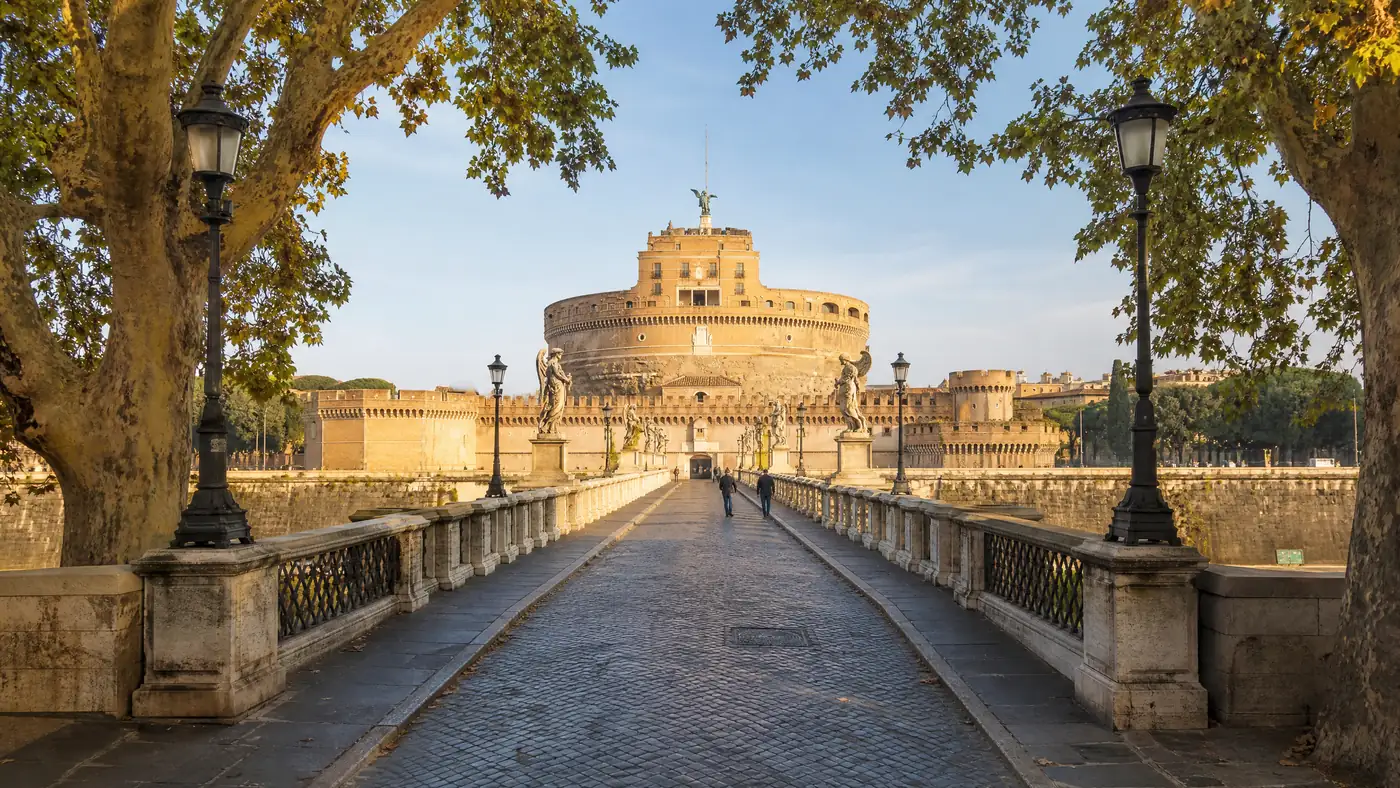
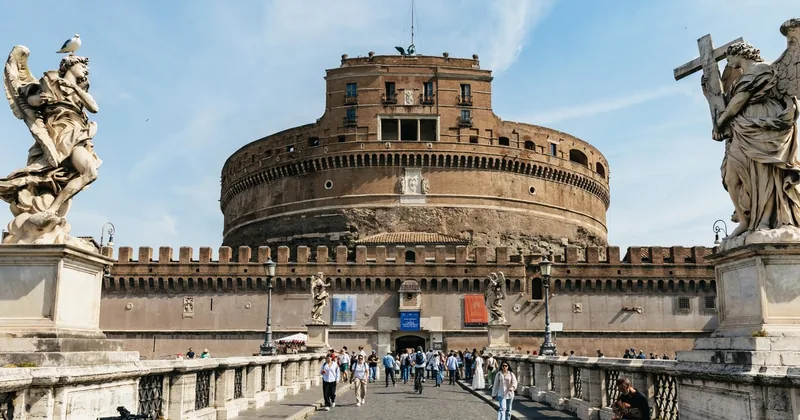
Seen from the bridge, Castel Sant'Angelo looks like a single block. Inside it is a climb through time. You start from the tomb that Hadrian had built for himself and his family in the 2nd century AD, completed in AD 139. You go up into the fortress that for centuries protected the popes, and arrive in the frescoed Renaissance rooms, up to the terrace beneath the angel.
In 2026 the route is affected by accessibility works, so the order of the rooms may change a little. The essence remains: below you will find what to see, level by level, and what you can only reach with a guide.
The short answer
Inside Castel Sant'Angelo you see Hadrian's tomb with the spiral ramp and the Sala delle Urne, the Courtyard of the Angel with the marble statue by Raffaello da Montelupo, the papal apartments with the Sala Paolina, the ancient prisons and the terrace with the view of St Peter's. It takes from one and a half to two hours. The Passetto di Borgo is visited separately, only with a guided tour.
Can you enter Castel Sant'Angelo?
Yes. It is the Museo Nazionale di Castel Sant'Angelo, open from Tuesday to Sunday from 9:00 to 19:30, with a full ticket of €18 from 1 July 2026.
The castle has been a state museum since 1925. You enter with the standard ticket, which covers the museum route up to the terrace; those under 18 enter for free and the first Sunday of the month is free for everyone. The full rates are in the guide to tickets.
Inside you walk a lot and climb a lot: the Roman ramp, the walkways, the stairs to reach the terrace. Wear comfortable shoes. Access for those with mobility issues is currently partial, and several tour listings indicate that they are not suitable for wheelchair users.
Why is Castel Sant'Angelo called a castle if it was a tomb?
Because for centuries it was a fortress. Hadrian's tomb was incorporated into the city walls and became a castle; the name Sant'Angelo comes from a legend from 590.
The name tells two stories. «Castello» comes from its military use: the Mole Adriana, the large round mausoleum on the Tiber, was incorporated into Rome's walls and became a fortress. «Sant'Angelo» comes from the legend: in 590 Pope Gregory the Great saw Archangel Michael above the mole sheathing his sword, a sign that the plague was over.
From then on, history reads like a timeline. The castle passes to the popes, becomes a Renaissance residence and prison, then Italian state property, and finally a museum. It wasn’t born a castle: it’s a Roman tomb that changed jobs.
| When | What happens |
|---|---|
| 2nd century AD, completed in AD 139 | Hadrian builds the mausoleum for himself and his family; in 134 the bridge, the Pons Aelius, is ready |
| 590 | According to legend, Gregory the Great sees Archangel Michael on the mole: the name is born |
| 1367 | The keys to the castle are handed to Pope Urban V |
| 1534-1549 | Paul III Farnese: the golden age as a papal residence |
| 1538 | Benvenuto Cellini escapes from the castle’s prisons |
| From the 17th century | Political prison, with detainees like Cagliostro |
| 1870 | Property of the Italian state |
| 1925 | Opens as a national museum |
What can you see inside Castel Sant'Angelo, from the tomb to the terrace?
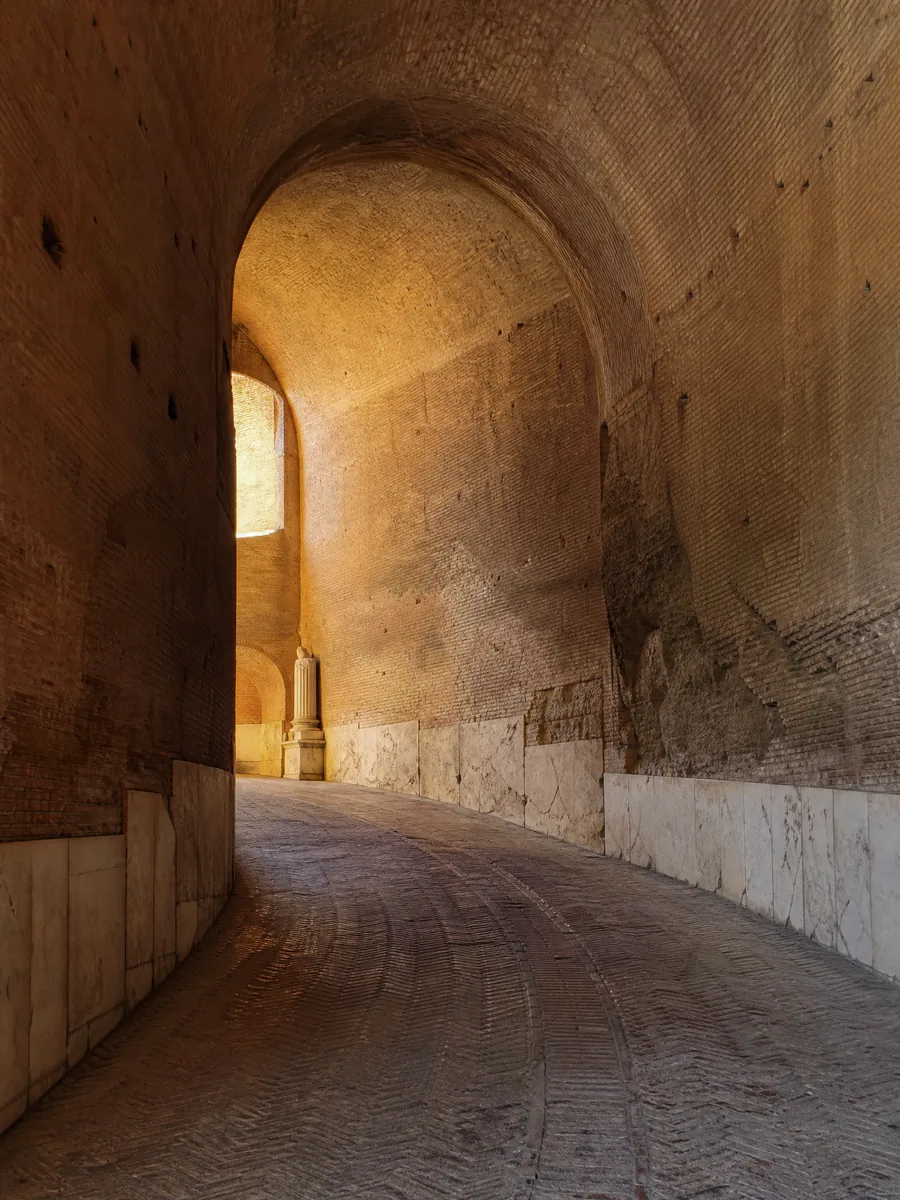
With the ongoing works, you can enter via the Dromos; you climb the spiral ramp of the Roman tomb and pass from the Sala delle Urne to the Cortile dell'Angelo. From there you go up to the papal apartments and the terrace.
The Dromos is the entrance corridor of the mausoleum. From here starts the spiral ramp, the brick spiral ascent of the tomb: it is the oldest part you walk through, and you tread on the same inclined plane as the Romans. The Sala delle Urne was the funeral chamber, the place of the ashes.
During the accessibility works, ongoing since December 2024, the museum may let you enter via the Dromos and climb the ramp to the Cortile dell'Angelo, diverting the ground-floor route. This is why some audio guides no longer follow the room order: according to reviews, it’s best to pick tracks from the list, not by number.
Above the tomb is the fortress: courtyards, bastions, prisons. Higher up are the papal apartments, and at the top the terrace. The order is always the same, from bottom to top, from antiquity to the Renaissance.
The ticket with an 8-language audio guide, to follow the climb from Hadrian’s ramp to the terrace with the stories of each room. Free cancellation up to 24 hours before.
Check dates for the ticket with audio guideWhat is the Courtyard of the Angel and who is the angel at the top of the castle?
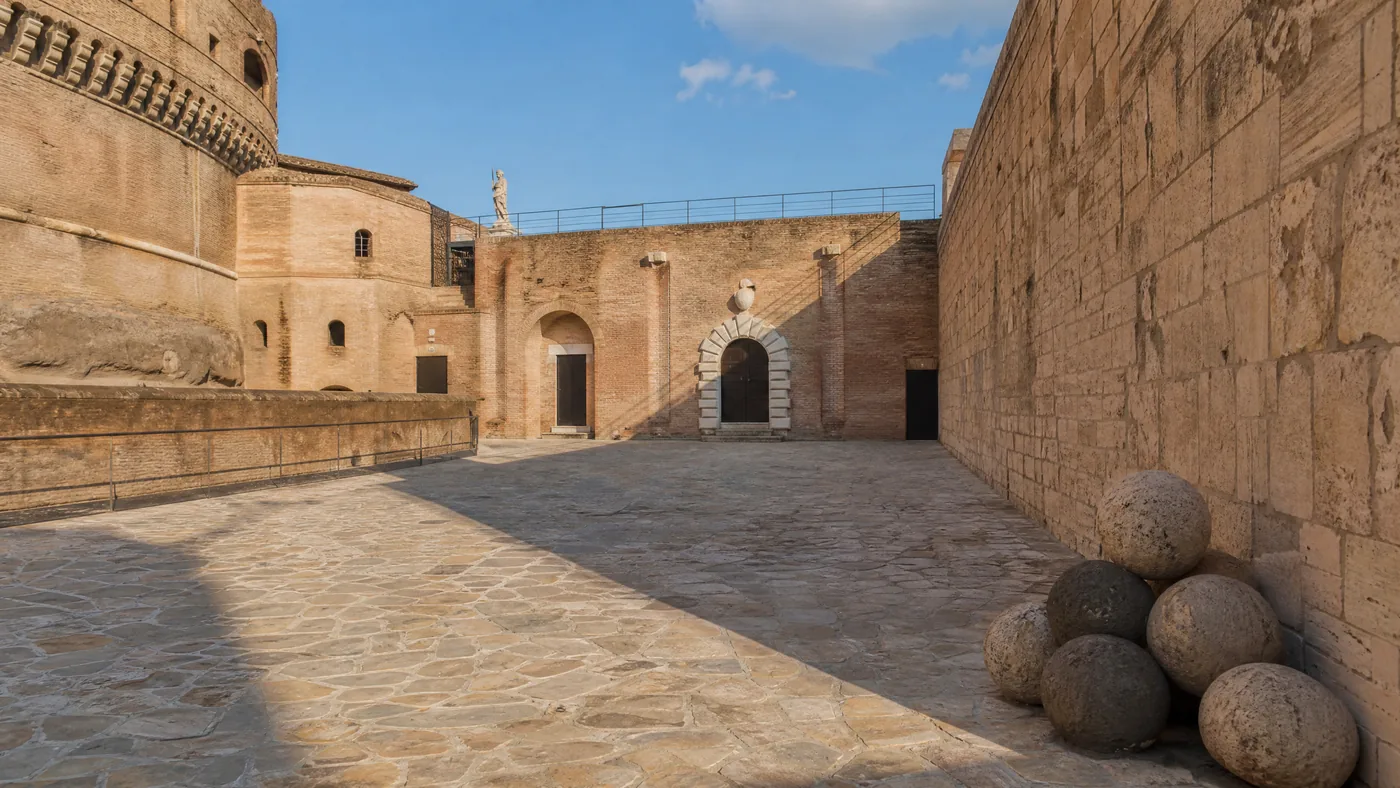
In the courtyard is the marble angel by Raffaello da Montelupo, from 1536, which once stood at the top of the castle. At the top today is the bronze Archangel Michael by Peter Anton von Verschaffelt, from 1753.
The courtyard takes its name from the statue. The marble angel sculpted by Raffaello da Montelupo in 1536 stood on top of the mole; today it is here, and you look at it from a few metres away. It is one of the few cases where a statue designed to be seen from afar is observed up close.
The angel on top is Archangel Michael in bronze by Peter Anton von Verschaffelt, from 1753. It recalls the legend of 590: Gregory the Great saw the archangel sheathe his sword above the mole, and the plague ended.
From the courtyard you move to the papal fortress environments. With the guided tour of the castle you enter, according to the listing, also into areas usually closed to the public, such as the Olearie and Clemente VII’s theatre.
What are the papal apartments like?
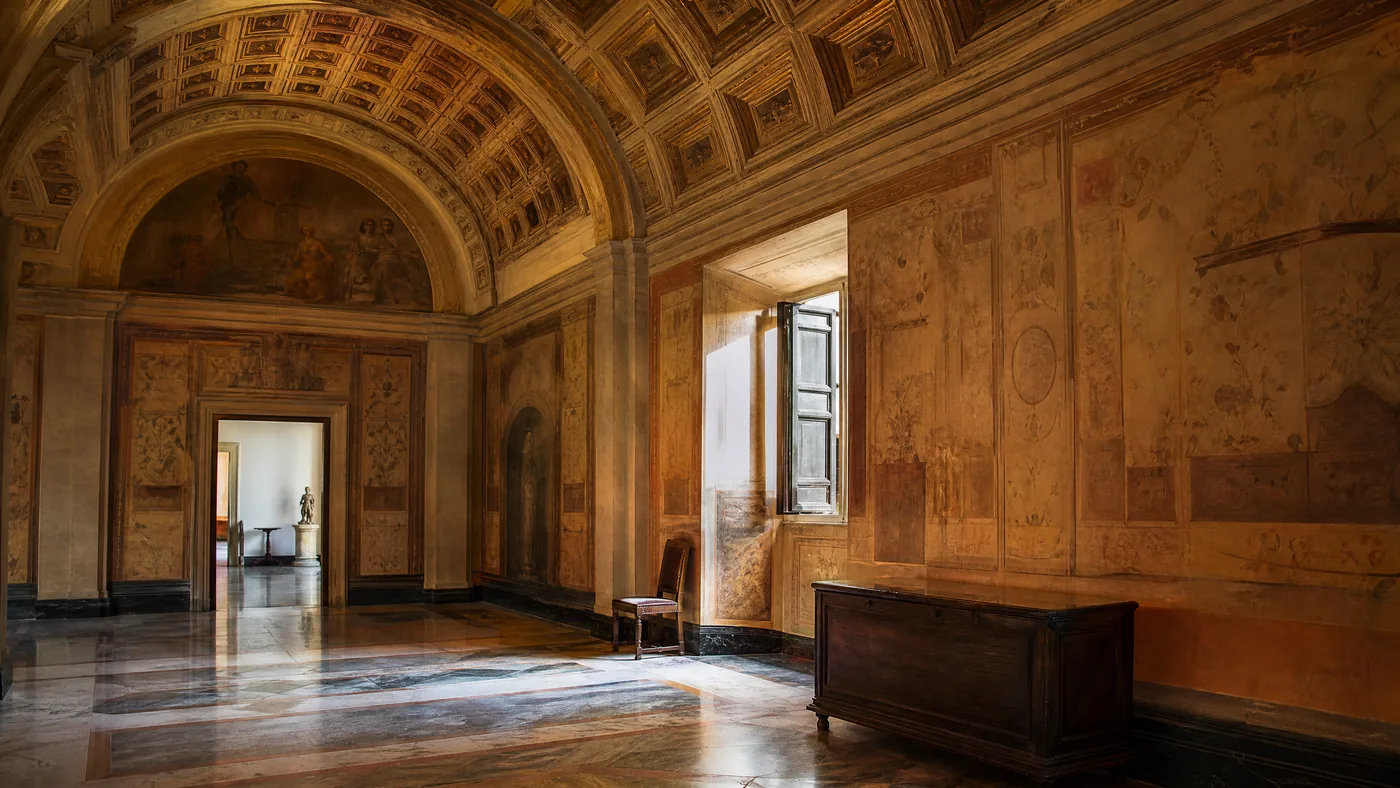
These are the rooms decorated in the Renaissance, with the golden age under Paul III Farnese (1534-1549). The most famous is the Sala Paolina, frescoed in the 1540s by Perin del Vaga’s workshop.
Here the castle stops looking like a fortress. The Sala Paolina is the great hall of Paul III; around it are the Sala di Apollo, the Sala della Biblioteca and the Sala di Amore e Psiche, the stufetta, the pope’s small bathroom, and the Sala del Tesoro. The popes used the castle as a residence and as a refuge, and in these rooms you can see how much it was a real residence.
In 2026 some rooms host exhibitions. In the Appartamento del Castellano there is «Fuochi sul Tevere: Roma attraverso gli occhi di Kanutas Ruseckas», until 22 November 2026. From 20 May 2026, the Sale Cambellotti have reopened with the exhibition «Cambellotti. Tutto diventa forma».
A live guide from Hadrian’s tomb to the papal apartments, including the Olearie, the historic prisons, and the theatre of Clement VII, which the listing indicates as areas usually closed to the public.
Discover the guided tour of Castel Sant'Angelo Tour detailsWhere are the prisons of Castel Sant'Angelo and who was imprisoned there?
In the fortress part: the castle was a prison for centuries. Among the most famous detainees are Giordano Bruno, Benvenuto Cellini, who escaped in 1538, and Cagliostro.
The museum remembers it as a political prison. Benvenuto Cellini, goldsmith and sculptor, escaped from the castle in 1538, and his escape is one of the stories that guides most like to tell. Giordano Bruno and Cagliostro passed through here at different times.
The historic prisons are also one of the areas usually closed that the tour with a guide mentions in the listing, while the listing for the small-group tour cites the cells of historical figures. The castle is also the setting for the final act of Puccini’s Tosca, from 1900, set on the ramparts: those who know the opera recognise them as they climb.
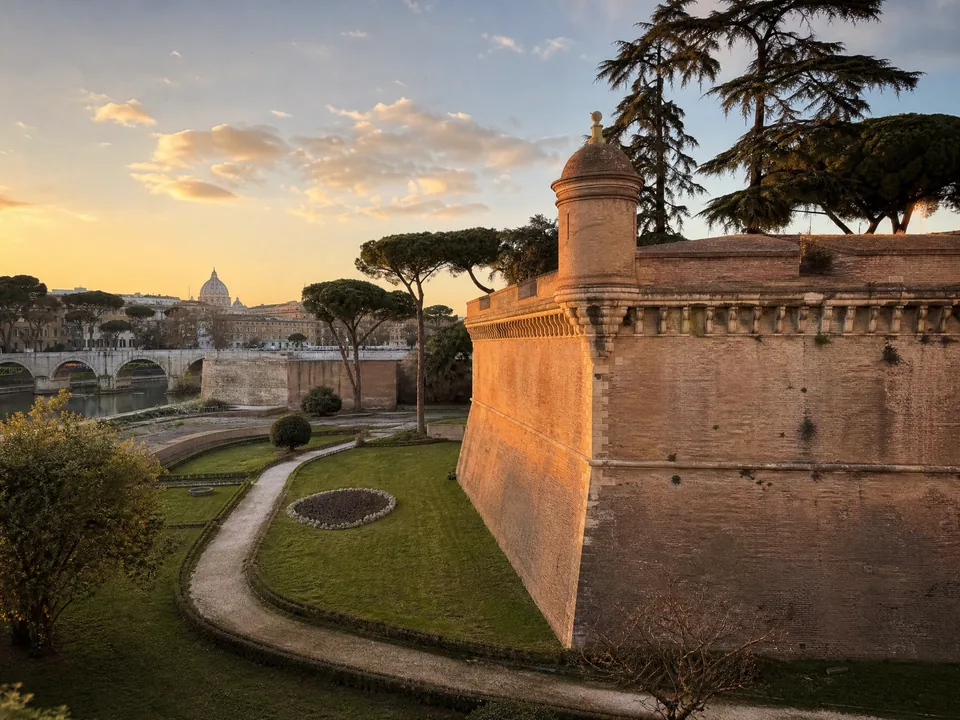
What can you see from the terrace of Castel Sant'Angelo?
A large part of Rome: the dome of St Peter’s, the rooftops of Borgo, the Tiber with its bridges, and the historic centre. Above you is the bronze angel.
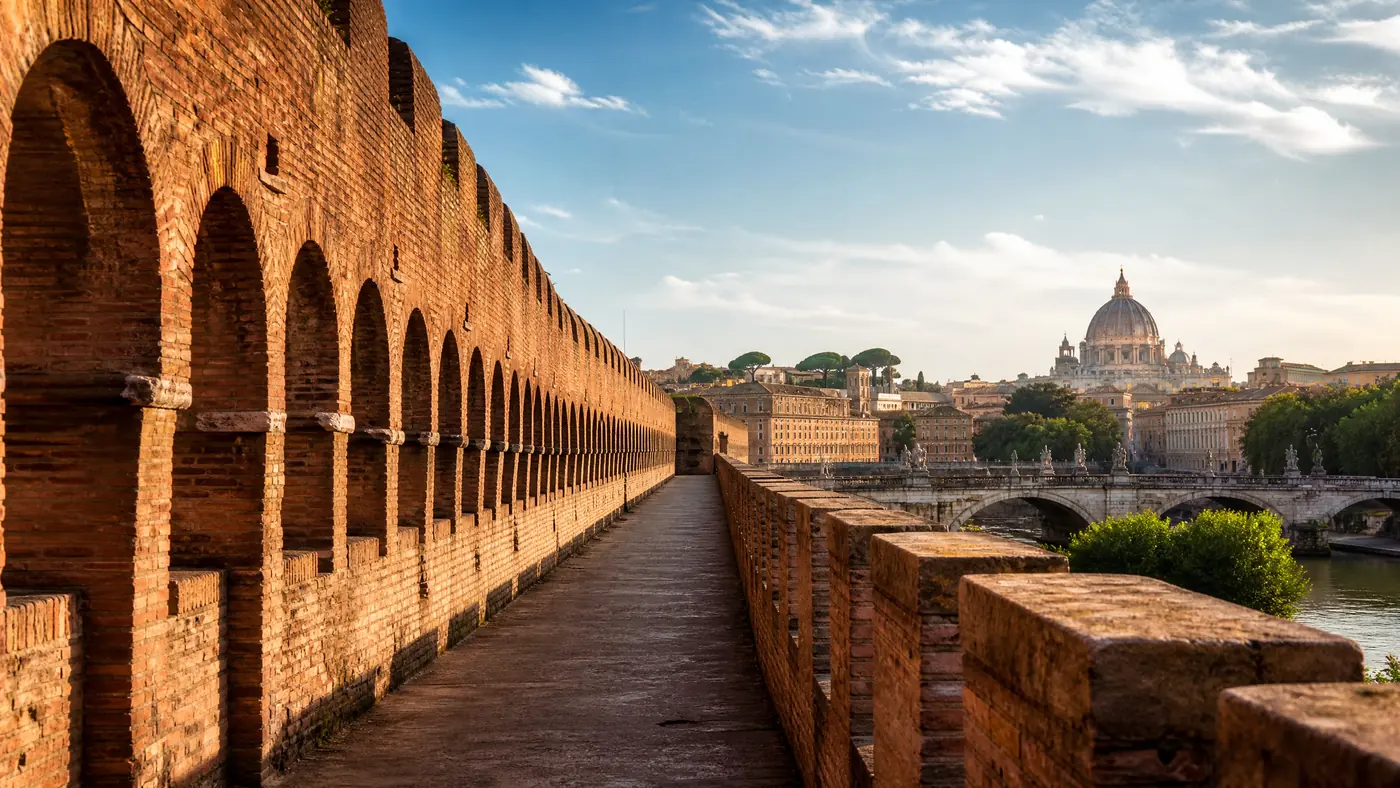
The terrace is the end of the climb and the memory many visitors take away. To get there, there are stairs, as the guided tour listing warns. From up there, St Peter’s dome seems within reach, and you see the route of the Passetto di Borgo, the covered passage on the walls towards the Vatican.
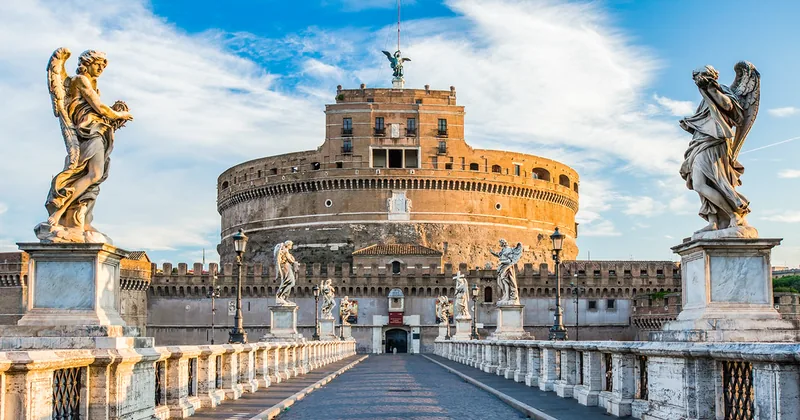
Also look down towards Ponte Sant'Angelo. The ten angels with the instruments of the Passion are from 1669, the result of Bernini’s programme; two of the originals are in the church of Sant'Andrea delle Fratte. The statues of St Peter and St Paul at the entrance to the bridge are from 1535.
★★★★★«Fantastic, by far the best view of the city. We loved it very much!»
★★★★★«I liked being able to go at my own pace, and with the audio guide I understood the history of what I was seeing very well. 10/10.»
The ticket with the panoramic terrace and a multi-language audio guide, collected from staff at the meeting point. Free cancellation up to 24 hours before.
Check dates for the terrace and audio guide ticketIs it worth entering Castel Sant'Angelo?
Yes. In two hours you cross almost two thousand years of Rome in a single building, and the terrace is one of the most beautiful views of the city.
If you’ve only seen the castle from the bridge, there’s more inside: the tomb’s ramp, the fortress, the popes’ rooms. It’s a visit that works even for those who don’t like museums, because you walk and climb more than you look at display cases.
The way you visit it changes the experience a lot. With the audio guide you go at your own pace; with a guide you understand what you see and, according to the listing of one of the tours, you enter spaces usually closed. The full comparison is in the guide to the guided tours.
★★★★★«The guide was prepared and knew many interesting facts and stories about the castle. The guided tour is really worth it.»
★★★★★«Our guide was Alec. He is very knowledgeable and made the history very interesting. We liked the history from the time of Christ to today, with lots of curiosities and stories.»
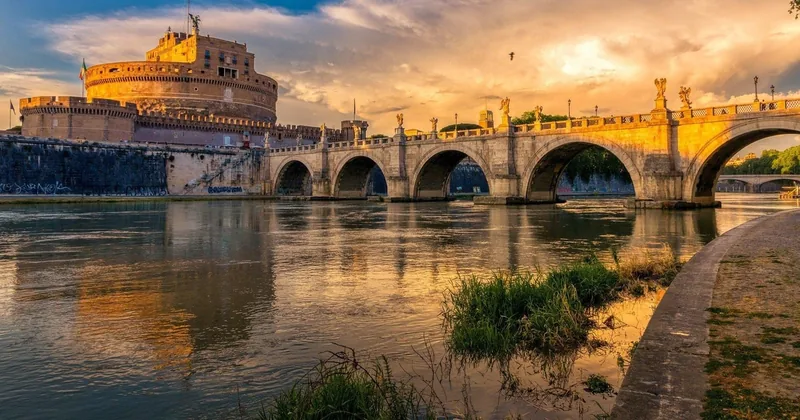
Two hours with a guide, reserved entry and headsets: the castle tour with the highest rating, 4.8 out of 154 reviews. Free cancellation up to 24 hours before.
Discover the 2-hour guided tour Tour detailsFrequently asked questions
How long does a visit to Castel Sant'Angelo take?
From one and a half to two hours for the full route, from Hadrian's ramp to the terrace. With the Passetto di Borgo, which is visited separately, add one hour.
Can you see the Passetto di Borgo with a normal ticket?
No. The Passetto is visited only with a guided tour and a separate fee, in the morning from Friday to Sunday and on Saturday evening, never on the first Sunday of the month.
Are there exhibitions at Castel Sant'Angelo in 2026?
Yes. In the Castellano's Apartment there is «Fuochi sul Tevere: Rome through the eyes of Kanutas Ruseckas» until 22 November 2026, and from 20 May the Cambellotti Rooms have reopened with «Cambellotti. Tutto diventa forma».
Is there a cloakroom at Castel Sant'Angelo?
No, the museum has no cloakroom and animals are not allowed. Several tour listings also exclude suitcases and large bags: bring only the essentials.
Ready to book
Choose your tour
Free cancellation on every option, up to 24 hours before. Prices are starting prices in USD and change with the season.
Castel Sant'Angelo with a guide
- Entry ticket to Castel Sant'Angelo
- Live guide throughout the tour
- Headsets if needed
2-hour guided tour
The highest-rated guided tour, with reserved entry and headsets
Ticket with digital audio guide
- Entry ticket to Castel Sant'Angelo
- Digital audio guide on your phone, in 8 languages
- Assistance at the entrance